You could have the most beautifully written, expertly researched piece of content on the internet — and it still won't rank if it doesn't match what the searcher actually wants. That gap between what you publish and what your audience is looking for is called a search intent mismatch, and it's one of the most common reasons SEO efforts fall flat. Understanding search intent isn't just a tactical checkbox; it's the foundation of creating content that Google rewards and users love.
What Is Search Intent?
Search intent (also called user intent or query intent) is the underlying goal or purpose behind a search query. It answers a simple question: what is the searcher actually trying to accomplish? When someone types a phrase into Google, they're not just entering words — they're expressing a need. That need might be to learn something, find a specific website, compare products, or make a purchase.
Google's entire algorithm is built around satisfying that need. The search engine's job is to match queries with the most relevant, helpful results — which means if your content doesn't align with the intent behind a keyword, it simply won't rank, regardless of how many backlinks you have.
Why Is Search Intent Important in SEO?
Search intent sits at the heart of modern SEO for one simple reason: Google prioritizes relevance over everything else. In its Search Quality Evaluator Guidelines, Google explicitly instructs raters to assess whether content meets the "needs met" standard — i.e., does the page actually satisfy what the searcher was looking for?
When you optimize for search intent correctly, you benefit from higher rankings and click-through rates, lower bounce rates as users find what they came for, better engagement and dwell time, increased conversions since your content aligns with where users are in their journey, and stronger topical authority over time. Ignoring intent, on the other hand, means publishing content that gets buried — no matter how well-optimized it appears on the surface.
Types of Search Intent
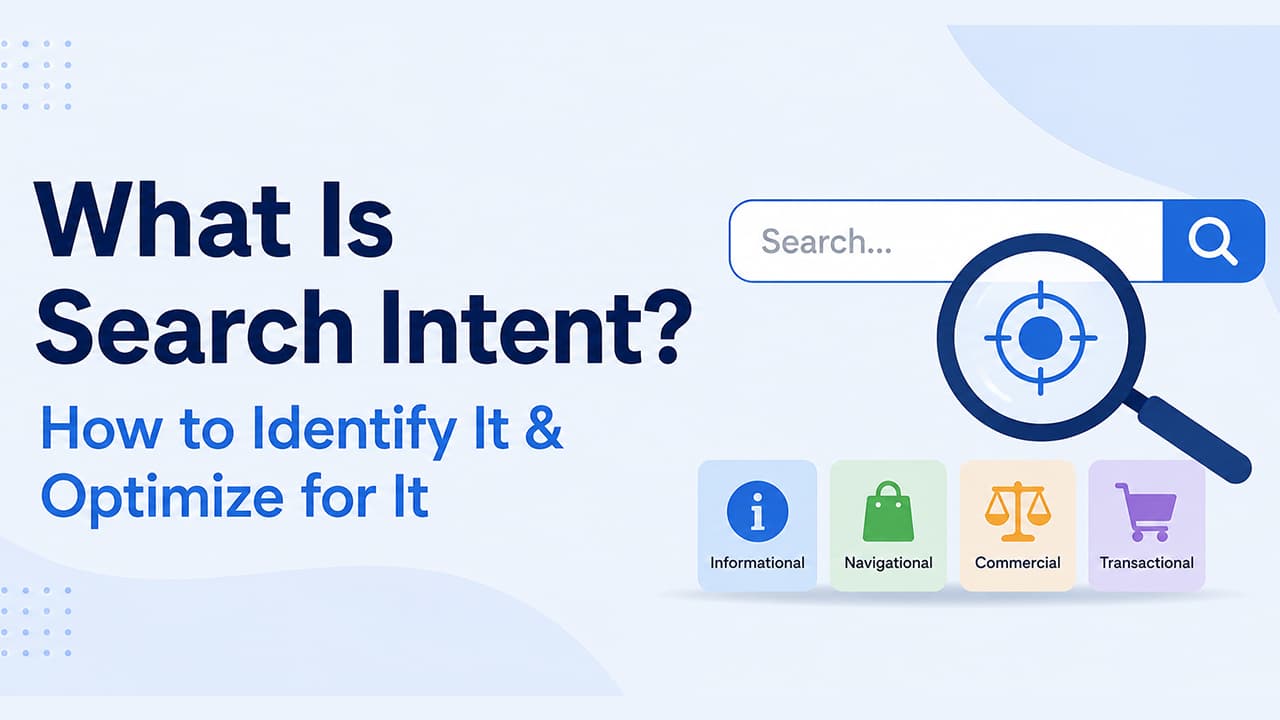
There are four widely recognized types of search intent, each representing a different stage of a user's journey.
Informational Intent
The user wants to learn something. These queries are typically questions or broad topics — "how does SEO work," "what is machine learning," or "symptoms of vitamin D deficiency." Informational content includes blog posts, how-to guides, explainers, and educational articles. This is where you build brand awareness and topical authority.
Navigational Intent
The user is trying to reach a specific website or page. Searches like "Semrush login," "YouTube Studio," or "Apple Support" fall here. The searcher already knows where they want to go — they're just using Google as a shortcut. Optimizing for navigational intent primarily matters for your own branded terms.
Commercial Intent
The user is researching before making a decision. They're not ready to buy yet but are actively comparing options — "best project management tools," "Shopify vs Woo Commerce," or "top running shoes 2025." Comparison articles, listicles, and in-depth reviews are ideal for this intent.
Transactional Intent
The user is ready to take action — usually to buy, sign up, or download. Queries like "buy Nike Air Max online," "free trial CRM software," or "download Lightroom" signal strong purchase intent. Product pages, landing pages, and CTAs are your best tools here.
Why Search Intent Goes Beyond a Basic Type
Categorizing a keyword as "informational" or "transactional" is only the beginning. Within each type, there's a sub-intent — a more specific expectation about content format, depth, and angle. For example, someone searching "how to write a resume" expects a step-by-step guide, not a philosophical essay on the importance of resumes. Someone searching "best resume templates" expects a curated list with visuals, not a wall of text.
Google picks up on these nuances by analyzing the dominant format among top-ranking pages. If the top 10 results for a keyword are all listicles, that tells you something important: a long-form narrative essay probably won't rank, even if it's technically superior in quality.
How to Identify a Keyword's Search Intent
Analyze the SERP
The search engine results page (SERP) is your single best signal. Google has already done the work of identifying what content format satisfies a query. Look at what content types dominate (blog posts, product pages, videos, tools), what the headlines say and how they're angled, whether there's a featured snippet and what format it uses, and what SERP features appear (People Also Ask, shopping results, knowledge panels). If the first page is dominated by "10 Best..." listicles, that's your template.
Study the Query's Language
The wording of a query reveals a lot. Words like "how," "what," "why," and "guide" suggest informational intent. Words like "best," "vs," "review," and "top" signal commercial investigation. "Buy," "cheap," "discount," "near me," and brand names point to transactional or navigational intent. Training yourself to read these signals speeds up your keyword research dramatically.
Use SEO Tools and Keyword Data
Tools like Semrush, Ahrefs, and Moz now label keywords by intent automatically. While these labels aren't always perfect, they're a helpful starting point. More useful is looking at the actual pages ranking for a keyword — their structure, word count, use of visuals, and calls-to-action tell you exactly what Google considers the ideal match for that query.
How to Optimize for Search Intent
Use the Dominant Content Format
Match the format the SERP favours. If top results are how-to guides, write a how-to guide. If they're product comparison tables, build a comparison table. Don't try to reinvent the wheel — Google has already validated what works for that keyword.
Cover the Full Intent Behind the Query
A searcher asking "how to start a podcast" isn't just looking for one tip — they want a complete picture. Cover the full scope of what the searcher needs to walk away satisfied. Use the "People Also Ask" box and related searches at the bottom of the SERP to identify complementary questions you should address.
Make Your Content Easy to Read and Digest
Intent-matching isn't just about what you say — it's also about how you present it. Use clear headings, short paragraphs, and bullet points. Add visuals where relevant. Make it skimmable for users who want quick answers and detailed enough for those who want depth. A good readability score isn't vanity — it directly supports intent satisfaction.
Optimize Your Title Tag and Meta Description
Your title tag and meta description should communicate intent alignment at a glance. If someone is searching for a quick how-to, your title should reflect that. If they want a comparison, call that out. These elements are your first opportunity to signal to both Google and the user: "This is exactly what you're looking for."
Match Search Intent Across the Buyer Journey
A robust content strategy covers all intent types across the funnel. Informational content builds awareness. Commercial content nurtures consideration. Transactional content drives conversion. Make sure you're not neglecting any stage — gaps in your intent coverage are gaps in your funnel.
Common Search Intent Mistakes to Avoid
Targeting the wrong format — writing a blog post when the SERP wants a product page.
• Targeting the wrong format — writing a blog post when the SERP wants a product page.
• Keyword stuffing without intent alignment — ranking for a term but not satisfying what the user actually needs.
• Ignoring sub-intent signals — treating all informational queries as identical without considering the angle or depth required.
• Mismatching the funnel stage — pushing hard CTAs on informational pages, which spooks users who aren't ready to buy.
• Failing to revisit old content — intent for a keyword can shift over time as user behaviour evolves. Audit regularly.
Create Content That Matches User Intent
Search intent is not a trend — it's the core principle behind how search engines evaluate and rank content. When you understand what a user truly wants and build your content around that need, you stop competing on technical metrics alone and start winning on relevance. That's a sustainable advantage.
Start by auditing your existing content through an intent lens. Are your informational posts actually informational? Are your product pages optimized for users ready to convert? The answers will reveal quick wins and longer-term opportunities to close the gap between what you publish and what your audience is searching for.
In the end, the best SEO strategy is a simple one: give people exactly what they came for. Do that consistently, and the rankings will follow.